Media literacy
Media literacy
Media literacy is a repertoire of competencies that enable people to analyze, evaluate, and create messages in a wide variety of media modes, genres, and formats.

In this episode of This Old Marketing, Robert and I ponder some new research that suggests certain types of marketing jobs will be replaced by machine automation within a decade. Is your job at risk? Next, we discuss the implications of Viacom’s new branded content agency and get excited about the storytelling potential of Facebook Canvas. Finally, we’re fascinated by the BBC’s research into “atomizing” news stories and enabling readers to choose their own deep exploration paths through them. Rants and raves include Chick-fil-A’s clever “cell phone coop,” one LinkedIn group admin’s heavy-handed solution to self-promotion, and Rita Gunther McGrath’s analysis of Yahoo’s problems. We wrap up the show with an example from Miller Electric.
(Recorded live March 4, 2016; Length: 1:01:40)
Download this week’s PNR This Old Marketing podcast.
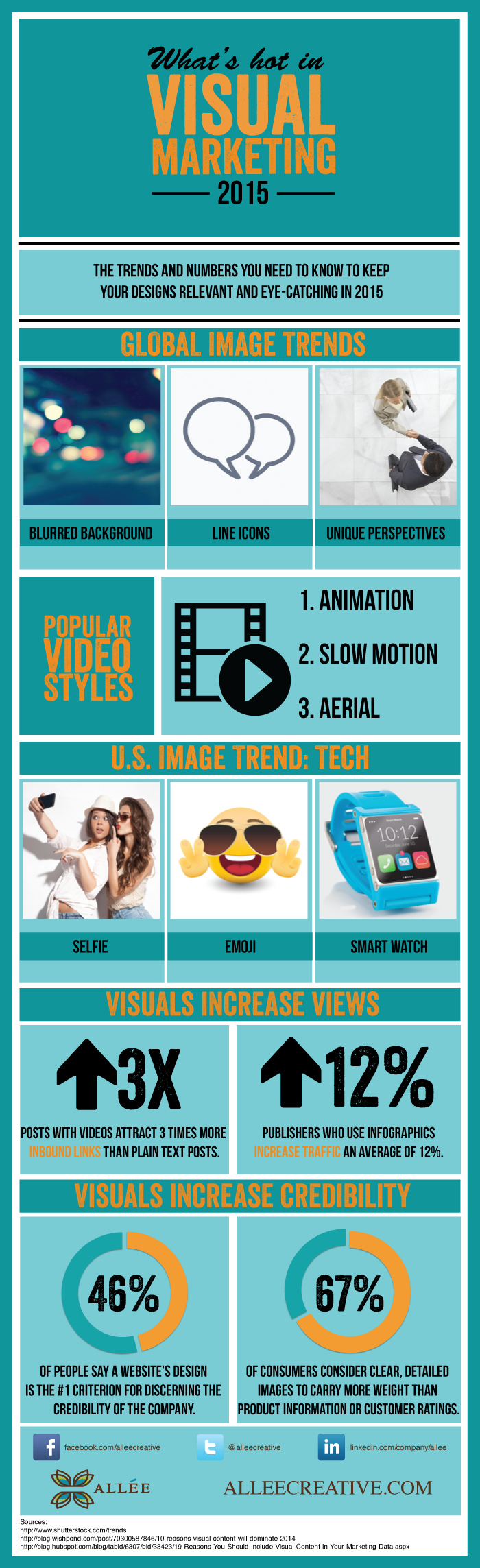
Not all visuals are created equal. While visual content plays a huge role in making your marketing efforts more effective, some visuals are hotter than others. In an effort to keep you hip and your visuals up-to-date, Shutterstock released its 2015 Creative Trends report this month. We were digging the great information, so we put some of the most important pieces in an infographic, below. Which of these will affect you and your business this year? Read on to find out:
You know when you’re spending some quality time with your good friend The Internet, and you click on that website that hasn’t been updated since 1996?
Don’t let that you be your website.
I know, 1996 was a long time ago, and I hope you’ve updated your website since then, as things change quickly in the world of digital marketing. You need to review your website strategy regularly. If you want your business to be credible, your website needs to be credible. You need to keep up with current website trends.
What’s hot in digital marketing strategy for your website right now?
Check out these seven digital marketing tactics for your website:
How many of these tactics are you using on your website? Set a goal for the remainder of the year to move toward using them all in order to enhance your visitors’ experience.
Erik Qualman, founder of Socialnomics, recently released his fifth video in the Socialnomics Series, and its findings are not only staggering but also a reminder that social media is here to stay. Here’s why:
We’ve said it before and we’ll say it again: if you’re not on social media, you’re missing out. It isn’t a trend or something “the kids do”. With over 50% of the world’s population under 30 years old, social, mobile and digital messaging will only rise. However, it’s not just young people who are embracing this new way of communicating. What’s truly surprising is grandparents are the fastest growing demographic on Twitter. If grandparents can adapt to new technology, so can you!
When you’re shopping online, regardless if it’s clothing or camping gear, would you be more apt to buy a product with lots of reviews or none? We thought so. If consumers have a positive experience, whether it be through customer service or product reviews, you can guarantee they’ll talk about it on social media. With that in mind, this shouldn’t be too surprising: 53% of people on Twitter recommends products in their tweets. And this stats warrants huge consideration: 90% of consumers trust peer recommendations, while only 14% trust advertisements. Sure, advertisements might inform you of new products, but the audience today won’t take advertisers’ word alone. They look to their peers for validity.
And these peers everyone is seeking out for opinions and recommendations from? They’re using social media. Many of us do it without even thinking. Posts like, “Does anyone have a great concrete repair company they can recommend?” or “ISO: home to rent” are rampant on social media sites. Consumers are spreading messages about companies and brands and those are the conversations we’re all listening to. Brands would do well to pay attention and learn about how others perceive them in this light as well.
They say the average attention span of a person is :07 seconds, slightly worse than a goldfish at :08 seconds. So, if you’re still reading, you’re better than the average person! When you think about it, we are constantly being pulled in different directions and only have time to absorb so much information. This realization has led to a new marketing school of thought. Rather than solely thinking of the four Ps of marketing: product, place, price, and promotion. Instead, we should be applying the four Cs of the digital world: creating, curating, connecting, and culture. Social media is about engaging in conversations with real people. Don’t be afraid to humanize your company. The lines between consumer and company have been blurred. Don’t get left behind in a black and white world.
We’ll leave you with the full-length video, but just remember, “We don’t have a choice on whether we do social media. The choice is how well we do it.”- Erik Qualman
Plain and simple: we live in a digital world. So, it’s no surprise new marketing strategies have emerged in order to adapt to our ever-changing digital marketplace. According to #Socialnomics 2014, only 14% of consumers believe or trust advertising, while a whopping 93% of consumers’ buying decisions are influenced by social media. It’s time to say goodbye to the 4Ps of marketing and say hello to the 4 Cs of digital marketing.
Meet your new digital marketing best practices:
Before the advent of mobile devices, advertising was neatly packed away into traditional marketing (e.g. television, print, radio and billboards). Creating content was formulaic for these mediums, and it worked. Until technology, advanced and target audiences were no longer paying attention to traditional methods. Rather than always creating content to sell your audience something, think of content that will drive conversations. Create your digital marketing brand voice and stay true to yourself.
Social media and community managers do so much more than post content on social media channels. Similarly to art curators in museums, social media managers are curators of content. They determine which pieces of content are appropriate for which channels, when to publish and how best to engage target audiences in a conversation. As new marketing strategies in the digital space arise, they decide whether or not it’ll be successful with their brand.
Instead of using the 4 Ps of marketing tactics (product, price, place and promotion), digital marketers are striving to engage consumers when and where they actually want to receive content (e.g. Twitter, Facebook, Instagram, Tumblr, Pinterest, etc.). Outdated methods such as guerrilla marketing are no longer effective nor appreciated. Consumers don’t want to be bombarded with messages. So, in an overly cluttered market, make sure to present your content in a meaningful manner to the consumer and in a channel or method to which they’ve subscribed.
Once a brand voice has been determined and distribution channels are selected, it’s up to the social media managers to maintain their brand’s culture. But, since digital marketing is constantly evolving, so should your brand. It’s okay to be a little quirky from time to time – just make sure the occasion is warranted. Your followers are following you for a reason. They like the type of content you publish, channels and ingenuity of your brand.
Out with the old 4 Ps of marketing and in with the new 4 Cs of digital marketing. Remember, consumers are turning to social media for peer recommendations on products. Make sure your brand is active in digital marketing. Engage your potential consumers in a conversation not a sales pitch. And, stay true to your brand voice.
How do you connect with your target audience?
As someone who is charged with getting the word out about your company’s products and services, you probably develop a lot of material each month. Some of it makes it through to the “approved” pile and others don’t see the light of day.
The messages you create that don’t make it through could be in the dark for a variety of reasons: budget constraints, change of venues, additional products or services that need to be marketed first. But that doesn’t always mean that your messaging was bad or that you can’t re-purpose it for another time.
Instead of reinventing the wheel with each marketing task you’re given, think about re-purposing content and ideas. Here are 4 ways to re-purpose your current marketing materials:
The copy you wrote for your latest advertising campaign might not have been used for your latest billboard or TV ad, but that doesn’t mean it can’t be used somewhere else. If the messaging is good, use it. Copy written for marketing materials can be re-purposed on blog posts, online ads, short 1-minute video clips, Q&A formats, etc. Keep a “copy” folder for items that are still relevant to your company but didn’t make the final cut. Then, grab that folder the next time you need to come up with marketing copy. Check out these 10 additional ways to recycle content.
PowerPoint or Prezi presentations can be re-purposed in a variety of ways. The easiest is to keep your latest presentation on hand and just make minor changes to it the next time you’re requested to present on a similar topic. Additional ways you can re-purpose presentations include cutting out pertinent pieces of information to be used for things like:
Much like you would re-purpose furniture or home decor, the design files you create for your company along the way can be re-purposed as needed. Maybe your boss didn’t quite go for the new layout of the services brochure you worked hard on, but it could fit quite nicely as the layout for the company newsletter. The point is, don’t trash your design files just because they didn’t work the first time. Sometimes opening those files are just what us marketers need to spark our creative juices for the next go-round.
The same can be said for print versus online marketing materials. Rather than recreate advertisements for small-scale print, large-scale print and the Web, think about ways that you can re-purpose designs you’ve already created for other mediums and scale them down to fit the new intended purpose.
Video is a great way to capture emotion and engage on a personal level with your audience; and you don’t necessarily need a large production budget to utilize this tool. Take video footage of things that you’re already doing: hosting client happy hours, sitting in on your CEO’s state of the business presentation, etc., and use the clips in a “get to know us” video promo. Video is also a great way to reiterate content you already have in print or blog form.
For example: Do you have industry-specific blog posts that talk about upcoming trends? Take those same posts and break them in to 1 or 2-minute video segments to post alongside your blog or on the homepage of your website. Short videos like these are also great to share on social media. For additional video marketing tips, check out this post by Business 2 Community.
We all wear many hats when it comes to marketing. Just remember: Before diving deep into a fresh new project, take a minute to think about the marketing materials you’ve created in the past and how they might help with your messaging in the future. More times than not, a good portion of the work has already been done; it’s just a matter of re-purposing it for the right channels and audience.
Content is king, but the amount of words it takes to create good content seems to be forever shrinking. We have seen social media trends transition from from blog posts, to Facebook status updates, to Twitter posts, and now we have come to a point in which visual content is the best way to engage on social media. Understanding why visual content is important and successful is necessary for any business that wants to keep up with its competition. The following are the top four reasons visual content is good for engagement:
As people scroll through their newsfeeds it is easy to ignore text, but not images; according to a 3M Corporation study, we process visual information 60,000 times faster than text. That means it’s almost impossible for someone to not at least register subconsciously that they saw your image. More often than not, that subconscious registration sparks people’s curiosity enough that they stop to look at the picture.
Most content that has gone “viral” is visual content. Images and video are the two most shared types of content online, thus making them the best candidates for engaging your customers and getting your audience to share your content for you.
Staying relevant on social media can be difficult. Social media moves at such a quick pace that a tweet is past its expiration date after 40 minutes. Getting your message seen is a must, but it also needs to be remembered, which is once again why visual content is so important; studies show that humans remember images better than text and the more a visual is viewed, the more likely someone is to remember it.
Due to the popularity of visual content, Google has added to how it ranks websites. Instead of just using keywords, Google now evaluates social shares. The amount of shares, likes, and retweets your content gets is now factored in to how well your site ranks on a search engine.
Whether you think social media is becoming more efficient or lazy is up to you, but either way you look at it, content is trending toward fewer words and more visuals. As the above examples prove, visuals are important and your business needs to jump on the visual content bandwagon if it doesn’t want to be left behind.
| ادارهکل پژوهشهای راهبردی رسانه این ادارهکل درقالب 4گروه پژوهشی تخصصی با عناوین گروه آیندهپژوهی رسانه، گروه ماهواره و رسانههای نوین، گروه جریانشناسی و تحلیل رسانهای، گروه زیباییشناسی و علوم شناختی به انجام پژوهشهای بنیادی و راهبردی در حوزه رسانه میپردازد. | |
|